

A warehouse management system (WMS) is essential for optimizing supply chain operations. The right WMS helps businesses streamline inventory management, improve order fulfillment, and enhance overall efficiency. This article reviews the top warehouse management systems to help you choose the best solution for your needs.
What Is a Warehouse Management System?
A warehouse management system (WMS) is software that helps businesses manage and control warehouse operations. It facilitates inventory tracking, storage management, and order processing. By automating these functions, a WMS improves accuracy, efficiency, and productivity.
Using a WMS enhances supply chain efficiency by reducing errors and minimizing manual work. It enables businesses to optimize storage space, streamline picking and packing, and improve order accuracy. Additionally, real-time data and analytics help managers make informed decisions.
A WMS enhances inventory control by providing real-time stock visibility. Businesses can track inventory levels, predict demand, and prevent stockouts or overstocking. Efficient order fulfillment ensures faster deliveries, improving customer satisfaction and operational efficiency.
Key Features to Look for in a Warehouse Management System
Inventory Tracking and Management
A strong WMS should provide accurate inventory tracking with real-time updates. It should support barcode and RFID scanning to ensure accurate stock counts. Effective inventory management prevents stock discrepancies and improves order accuracy.
Real-Time Data and Analytics
Real-time analytics help businesses monitor warehouse performance. A WMS should provide reports on stock levels, order trends, and labor productivity. Data-driven insights improve decision-making and optimize operations.
Automation and AI Capabilities
Automation reduces manual tasks and increases efficiency. AI-driven WMS solutions improve demand forecasting, reduce picking errors, and automate replenishment. These features streamline warehouse processes and enhance productivity.
Integration with ERP and Other Business Software
Seamless integration with enterprise resource planning (ERP) and supply chain management software is essential. A WMS should connect with accounting, customer relationship management (CRM), and shipping platforms. This ensures smooth data flow across departments.
Scalability for Business Growth
A scalable WMS adapts to business growth and changing demands. It should support increasing inventory volumes and additional warehouse locations. Businesses should choose a flexible system that scales with their expansion plans.
Cloud-Based vs. On-Premise Solutions
Cloud-based WMS solutions offer flexibility, remote access, and minimal IT maintenance. On-premise systems provide greater control and customization but require in-house IT support. Businesses should evaluate their needs before choosing between cloud and on-premise options.
Top Warehouse Management Systems Reviewed
1. SAP Extended Warehouse Management (EWM)
SAP EWM is a powerful solution designed for large enterprises with complex supply chains. It offers advanced automation, real-time inventory visibility, and deep integration with SAP ERP.
Pros:
- Advanced automation and AI-driven capabilities
- Seamless integration with SAP systems
- Highly flexible and configurable
Cons:
- High implementation costs
- Requires strong IT expertise
Best for: Large enterprises and businesses with complex warehouse operations.
2. Manhattan Associates WMS

Manhattan Associates WMS is ideal for retail and omnichannel operations. It offers machine learning-driven inventory management and robust order fulfillment capabilities.
Pros:
- Strong omnichannel support
- AI-driven demand forecasting
- Scalable and flexible
Cons:
- Implementation can be complex
- High learning curve for new users
Best for: Retailers and businesses with omnichannel fulfillment needs.
3. Blue Yonder (JDA) WMS

Blue Yonder WMS is an AI-powered warehouse management system that optimizes automation and inventory control. It offers predictive analytics and autonomous decision-making tools.
Pros:
- AI-driven automation
- Predictive analytics for warehouse optimization
- Strong integration with supply chain solutions
Cons:
- Expensive implementation
- Requires ongoing maintenance
Best for: Businesses requiring advanced automation and AI-driven warehousing.
4. Oracle Warehouse Management Cloud (WMS)
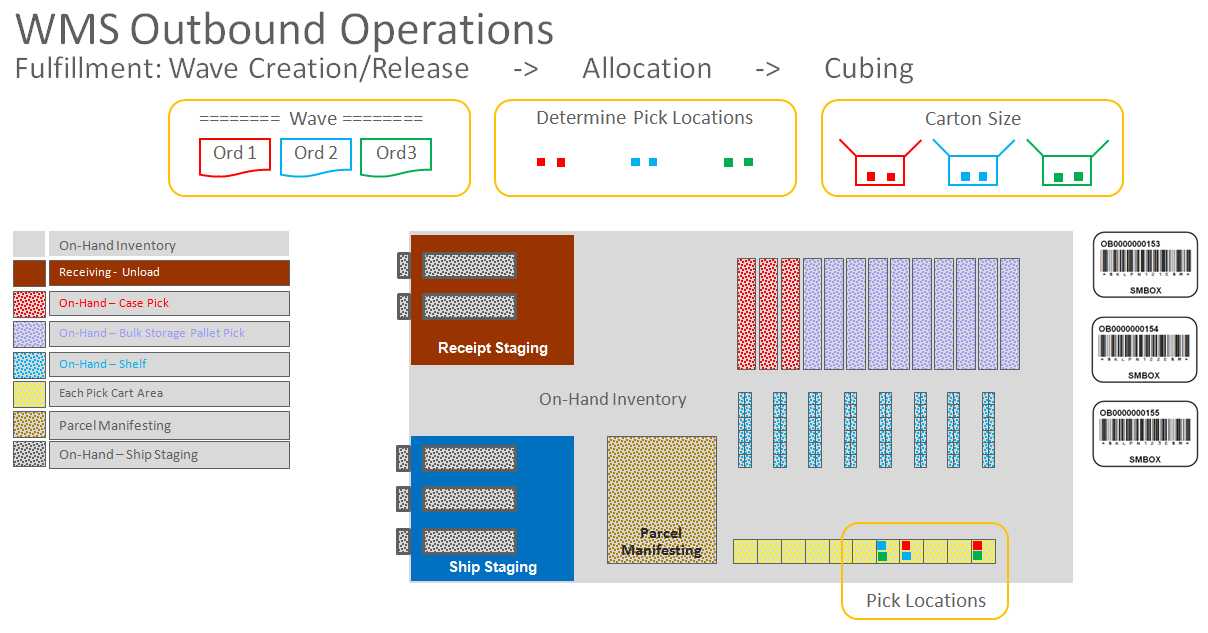
Oracle WMS Cloud is a cloud-based solution that integrates seamlessly with Oracle ERP and supply chain software. It supports real-time inventory tracking and automation.
Pros:
- Cloud-based for flexibility and scalability
- Deep ERP integration
- Advanced reporting and analytics
Cons:
- Can be expensive for small businesses
- Some customization limitations
Best for: Businesses needing a cloud-based WMS with strong ERP integration.
5. Fishbowl Warehouse
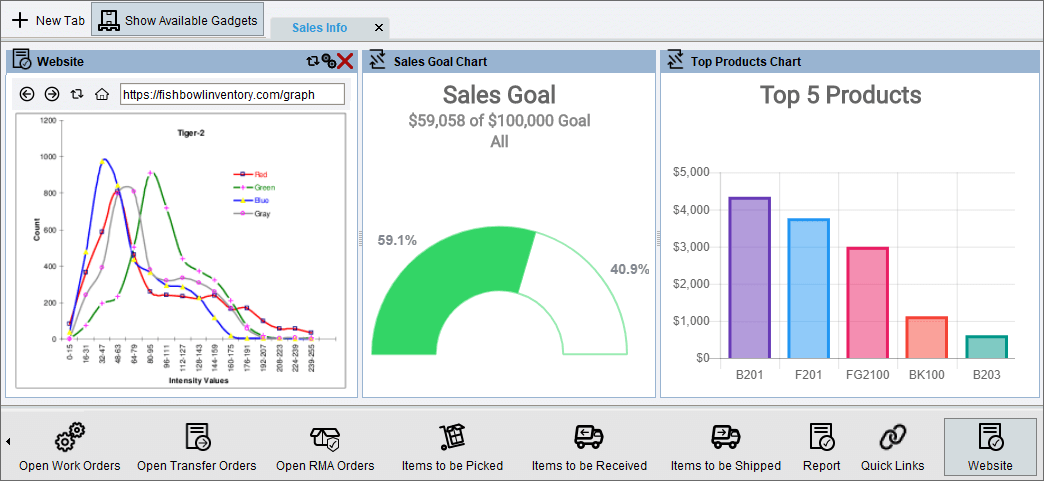
Fishbowl Warehouse is an affordable WMS tailored for small to mid-sized businesses. It integrates seamlessly with QuickBooks, making it ideal for inventory and order management.
Pros:
- Cost-effective solution
- Easy integration with QuickBooks
- User-friendly interface
Cons:
- Limited scalability for large enterprises
- Basic automation features
Best for: Small to mid-sized businesses looking for QuickBooks integration.
6. Softeon WMS

Softeon WMS offers flexible and configurable solutions for various industries. It provides strong automation and real-time inventory tracking features.
Pros:
- Highly configurable to business needs
- Strong automation capabilities
- Supports multiple warehouse environments
Cons:
- Requires proper configuration for optimal use
- Initial setup can be complex
Best for: Businesses looking for a versatile and configurable WMS.
7. Infor WMS
Infor WMS is known for its user-friendly interface and strong cloud capabilities. It offers real-time data insights and AI-powered warehouse management features.
Pros:
- Cloud-based with on-premise deployment options
- Strong AI and automation tools
- Easy-to-use interface
Cons:
- Customization can be costly
- Learning curve for advanced features
Best for: Businesses needing a user-friendly WMS with cloud capability.
How to Choose the Right Warehouse Management System for Your Business
Factors to Consider Before Purchasing a WMS
Assess your business goals, warehouse size, budget, and technical requirements. Consider whether a cloud-based or on-premise solution suits your needs. Choosing a scalable system ensures long-term efficiency.
Questions to Ask Potential Vendors
Ask vendors about implementation time, customer support, and integration capabilities. Inquire about automation features, training resources, and customization options. Comparing vendor offerings helps in selecting the best WMS.
Budget Considerations and ROI Evaluation
A WMS is a long-term investment, so evaluating ROI is crucial. Consider the total cost of ownership, including licensing, maintenance, and training. A cost-effective WMS should deliver efficiency improvements and cost savings.
Customization and Scalability Options
A customizable WMS adapts to unique business needs. Evaluate whether the system can scale with your business growth. Choosing a flexible and scalable WMS ensures optimal long-term performance.
Conclusion
Selecting the right warehouse management system can significantly enhance operational efficiency. SAP EWM, Manhattan Associates WMS, and Blue Yonder WMS are ideal for large-scale automation. Oracle WMS Cloud and Infor WMS offer strong cloud-based capabilities. Smaller businesses may benefit from Fishbowl Warehouse or Softeon WMS.
Carefully assess your business needs, budget, and scalability requirements before making a decision. Research vendors, request demos, and consider trial periods to find the best WMS for your operations. Investing in the right WMS helps streamline warehouse management and improve overall supply chain efficiency.